


Hagia Sophia Mosque in Istanbul: History, Architecture and Visiting Guide
2026-11-09
58,567 Views
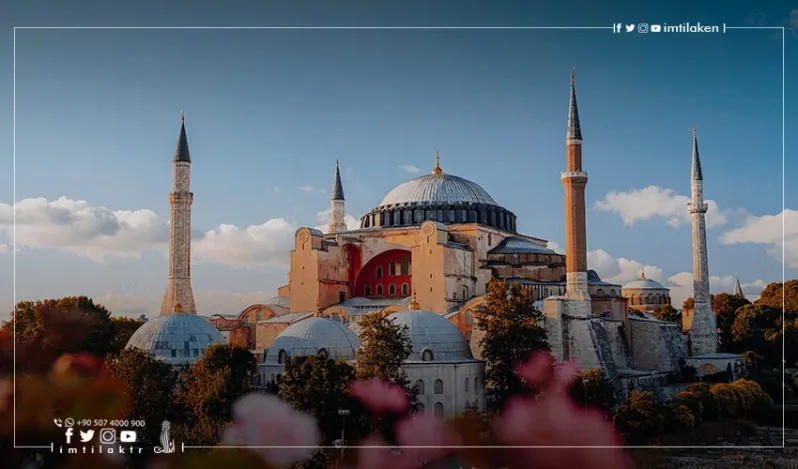


Hagia Sophia (Ayasofya) is a 6th-century building in Istanbul's Sultanahmet that has served as a cathedral, a mosque, a museum and, since July 2020, a mosque again. It is open to visitors of all faiths: the ground-floor prayer hall is free, while foreign visitors pay for a separate route through the upper gallery.
Fact | Detail |
Built | 532 to 537, under Byzantine Emperor Justinian I |
Current status | Active mosque since 24 July 2020 |
Fee for foreign visitors | €25 for the upper gallery; prayer hall free |
What you can actually see, and when you can go in, depends on prayer times, the ongoing restoration and the route you take, all covered below.
- What is Hagia Sophia?
- A short history: four lives of one building
- Byzantine cathedral (537 to 1453)
- Ottoman mosque (1453 to 1934)
- Museum (1934 to 2020)
- Mosque again (2020 to today)
- Architecture: the dome, the mosaics and the calligraphy
- The restoration underway in 2025 and 2026
- Visiting Hagia Sophia today
- Tickets and entrances
- Opening hours and prayer times
- Dress code and etiquette
- How to get there
- What else is nearby
- Frequently asked questions
What is Hagia Sophia?
The name comes from Greek and means "Holy Wisdom". In Turkish the building is called Ayasofya, and its official name as a mosque is Ayasofya-i Kebir Cami-i Şerifi, often shortened in English to Hagia Sophia Grand Mosque. Older English texts also call it the Mosque of St. Sophia.
It stands on the historic peninsula in the Fatih district, on Istanbul's European side. Sultanahmet Square separates it from the Blue Mosque (Sultan Ahmed Mosque), and Topkapı Palace begins just behind it. Hagia Sophia is one of the monuments inside the "Historic Areas of Istanbul", which UNESCO added to the World Heritage List in 1985.
A short history: four lives of one building
Byzantine cathedral (537 to 1453)
The present building is the third church on the site. The earlier church burned during the Nika Revolt in 532, and Emperor Justinian I ordered a far larger replacement. The architects Anthemius of Tralles and Isidore of Miletus completed it in 537. After an earthquake damaged the original dome, it was rebuilt higher by Isidore the Younger and completed in 562, giving the building the form it largely keeps today.
For centuries it was the main church of the Byzantine capital. During the Fourth Crusade it was looted, and between 1204 and 1261 it served as the cathedral of the Latin Empire.
Ottoman mosque (1453 to 1934)
After Sultan Mehmed II (Fatih Sultan Mehmed) conquered Constantinople in 1453, he ordered Hagia Sophia converted into a mosque and endowed it to his own charitable foundation (waqf). Over the following centuries, the Ottomans added minarets, a mihrab, royal tombs and buildings around it, including a primary school (sıbyan mektebi) and a timekeeper's house (muvakkithane). It remained the city's principal mosque for almost five centuries.
Museum (1934 to 2020)
On 24 November 1934, a decision of the Council of Ministers of the Turkish Republic turned the mosque into a museum, and it opened to visitors as a museum in 1935. During this period, plaster was removed from many Byzantine mosaics, and the building became one of the most visited museums in Turkey.
Mosque again (2020 to today)
On 10 July 2020, the 10th Chamber of Turkey's Council of State annulled the 1934 decision, ruling that the building belongs to the foundation of Mehmed II and was designated as a mosque. A presidential decree issued the same day transferred it to the Presidency of Religious Affairs (Diyanet). The first Friday prayer was held on 24 July 2020, 86 years after the last one.
Year | Event |
532 | Earlier church destroyed in the Nika Revolt; construction of the present building begins |
537 | Hagia Sophia completed under Justinian I |
562 | Rebuilt, higher dome completed after earthquake damage |
1453 | Converted into a mosque after the Ottoman conquest |
1934 | Council of Ministers decision turns it into a museum |
1985 | Listed by UNESCO within the Historic Areas of Istanbul |
2020 | Council of State annuls the 1934 decision; first Friday prayer on 24 July |
2024 | Separate paid visitor route for foreign tourists from 15 January |
Architecture: the dome, the mosaics and the calligraphy
Hagia Sophia joins a long basilica plan to a huge central dome, a combination that was new for its time. The building measures roughly 82 by 73 metres. Its main dome is about 31 to 32 metres across; repairs over the centuries have left it slightly elliptical. The crown of the dome sits about 55.6 metres above the floor.
Four pendentives, the curved triangles between the arches, carry the round dome over a square base. Two semi-domes, one on each side of the long axis, extend the space. A ring of 40 windows at the base of the dome lets light into the nave, which is why the dome seems to float. The outside of the dome is covered in lead sheeting.
• Byzantine mosaics: the best-known panels are in the upper gallery and above the entrances, including the Virgin and Child flanked by Emperors Constantine and Justinian above the southwestern entrance.
• Ottoman calligraphy: eight large round panels hang in the nave. They were written by the calligrapher Kazasker Mustafa İzzet Efendi during the 1847 to 1849 restoration and carry the names of Allah, the Prophet Muhammad, the four caliphs Abu Bakr, Umar, Uthman and Ali, and the Prophet's grandsons Hasan and Husayn.
• Mihrab and minbar: added in the Ottoman period and set slightly off the building's axis so that they face Mecca.
Because the building is now a mosque, figurative mosaics in the prayer area are covered or screened during prayer times.
The restoration underway in 2025 and 2026
Turkey's Ministry of Culture and Tourism, through the General Directorate of Foundations (Vakıflar), is carrying out a major restoration focused on earthquake safety. In 2025, work moved to the main dome: a temporary steel roof and platform were built over it so that the lead covering can be removed, repaired or replaced and the dome strengthened, while the mosaics inside stay protected from the weather.
In July 2026, the steel roof was wrapped in a grey, flame-retardant membrane chosen to match the look of the lead. Worship continues during the work. If you visit in this period, expect scaffolding inside and outside, and parts of the building that may be screened off.
Visiting Hagia Sophia today
Tickets and entrances
Since 15 January 2024, visits are split into two routes. Worshippers enter the ground-floor prayer hall through the mosque entrance free of charge. Foreign visitors coming to sightsee use a separate entrance and pay €25 for a route through the upper gallery, where most of the mosaics are. The fee is set in euros and paid in Turkish lira at the day's rate.
Do not confuse this ticket with the Hagia Sophia History and Experience Museum, a separate building nearby with its own ticket.
Opening hours and prayer times
Hagia Sophia is open every day, but as a working mosque it pauses tourist access around the five daily prayers. The longest closure is at Friday midday prayer. Opening hours also change between summer and winter, so check the hours and the day's prayer times in Istanbul before you go, and plan Friday visits for the morning or late afternoon.
Dress code and etiquette
• Shoulders and knees must be covered for everyone.
• Women cover their hair with a scarf; scarves can usually be obtained at the entrance, but bringing your own saves time.
• Shoes come off before stepping onto the prayer carpets.
• Keep your voice low, and do not photograph people who are praying.
How to get there
The easiest way is the T1 tram (Kabataş to Bağcılar line), getting off at the Sultanahmet stop, a short walk from the building. From Taksim, take the funicular down to Kabataş and change to the T1.
Question | Answer |
Who pays? | Foreign visitors on the sightseeing route |
How much? | €25, upper gallery route |
Prayer hall | Free, for worship |
Busiest closure | Friday midday prayer |
Nearest tram stop | Sultanahmet (T1) |
What else is nearby
Hagia Sophia sits at the centre of Istanbul's densest cluster of landmarks. Within a few minutes' walk you will find the Blue Mosque, Topkapı Palace, Hagia Irene in the palace's first courtyard, the Basilica Cistern and the Hippodrome. For more on the city's districts and landmarks, see our Istanbul city guides.
Sultanahmet belongs to Fatih, on Istanbul's European side. If you are thinking about living or investing on this side of the city, you can browse apartments for sale on the European side of Istanbul or explore properties for sale across Istanbul.
Book your free consultation with our team to compare areas, budgets and options.
Frequently asked questions
Is Hagia Sophia a mosque or a museum now?
It is a mosque. Turkey's Council of State annulled the 1934 museum decision on 10 July 2020, and the first Friday prayer was held on 24 July 2020.
Can non-Muslims visit Hagia Sophia?
Yes. Visitors of all faiths can enter outside prayer times, as long as they follow the dress code.
How much is the Hagia Sophia ticket?
Foreign visitors pay €25 for the upper gallery route, introduced on 15 January 2024. Entering the prayer hall to worship is free.
When did Hagia Sophia first become a mosque?
In 1453, after Sultan Mehmed II conquered Constantinople.
Who built Hagia Sophia?
Emperor Justinian I commissioned it, and the architects Anthemius of Tralles and Isidore of Miletus completed it in 537.
Why is there scaffolding on Hagia Sophia?
A major restoration is strengthening the main dome against earthquakes and repairing its lead covering. Worship continues while the work is underway.
Edit: Imtilak Real Estate ©
Do you like this topic? You can share it with your friends now!


Do you like this topic? You can share it with your friends now!


