Why Investors Choose Second Citizenship?
2026-08-31
1,254 Views
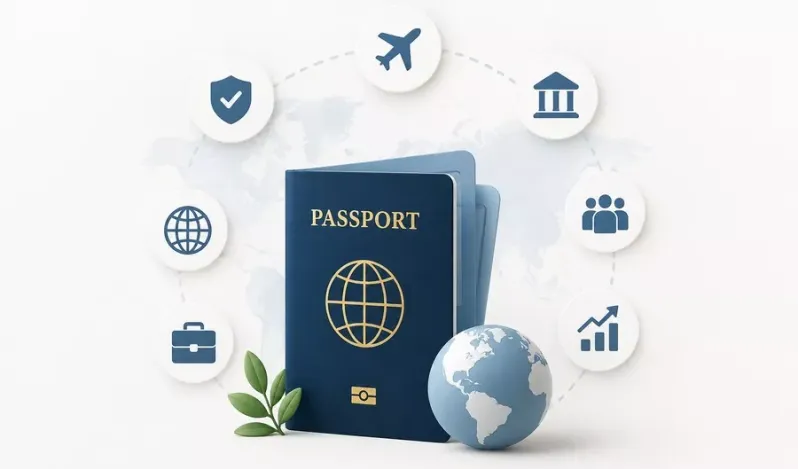


Henley & Partners, the world’s largest global citizenship and residency consulting firm, received applications from 100 different nationalities in 2025, an increase of 28% over the previous year. This number alone sums up the story: second citizenship is no longer a rare luxury sought by a few wealthy individuals, but a practical plan that an increasing number of people pursue every year, whether seeking broader freedom of movement, greater stability, or a different future for their children.
But before you decide which path to take, it’s worth first understanding: What do you actually gain? What’s the difference between “second citizenship” and a “second passport”? And what are the ways to obtain them? This guide answers these questions for you, step by step.
- What is second citizenship and how is it related to obtaining a second passport?
- Top advantages of obtaining a second passport
- Are there disadvantages or considerations to be aware of?
- What are the ways to obtain a second passport?
- What is the easiest and cheapest way to get a second passport?
- Is it actually possible to buy a second passport?
- How do you choose the right second citizenship for you?
- How does Imtilak Real Estate help you?
- Frequently asked questions about obtaining second citizenship
What Is Second Citizenship, and How Does It Lead to a Second Passport?
Second citizenship is your full legal belonging to another country besides your original country, with all the rights and obligations that entails. The second passport, on the other hand, is the practical result of this citizenship; it is the document that this belonging puts in your hands.
The difference here is not merely formal. You may obtain long-term residency in a country without being granted its citizenship, and therefore you will never hold its passport. But once the naturalization procedures are complete, the passport comes as a matter of course, not as a separate goal in itself.
How many living rooms are in the apartment?

Top advantages of obtaining a second passport
1- Freedom of movement without the restrictions of your original passport
Some passports open wide doors, while others close them. When a second passport grants you visa-free access to dozens or hundreds of additional destinations, you gain not just the luxury of travel, but real flexibility in spontaneous decisions: an urgent business meeting, an investment opportunity, or even an unplanned family vacation.
2- An alternative plan in an uncertain world
This is the most common motivation behind many people’s decisions. No one wishes to need a backup plan, but having one gives you peace of mind beyond measure: another place you can turn to if political or economic conditions change in your country.

3- Global business and investment opportunities
A strong second passport often means easier dealings with international banks and financial institutions, and sometimes direct access to markets and trade agreements that were not available to you with your original citizenship alone.
4- Better educational future for your children
Some nationalities open the doors of universities and schools with easier conditions or lower fees, in addition to the freedom to choose the country of study or residence later without the usual student visa restrictions.
5- Exemption from mandatory military service in some cases

Depending on your original country and its policies, obtaining a second citizenship and a different legal status may grant you additional flexibility regarding military service obligations, which is a deeply considered factor for many young families.
Learn about the advantages of Turkish citizenship
Are there disadvantages or considerations to be aware of?
To be completely honest, the decision is not without cost or challenges:
- The financial cost is not simple, and ranges from one hundred thousand dollars to over a million, depending on the path you choose.
- Some programs are subject to strict security checks, and applications can be rejected for reasons beyond just financial solvency.
- Laws are subject to change, and some countries have modified their program requirements or raised their financial thresholds in recent years without much prior notice.
Get a free real estate consultation
What is your preferred way of communication? How would you like to be contacted?

Get a free real estate consultation
Choose the appropriate day for us to contact you
These considerations do not diminish the value of the idea, but they deserve to be part of your decision from the start, not a surprise you discover later.
What are the ways to obtain a second passport?
There are several paths to second citizenship, the most prominent are:
- Investment: the fastest and most widespread route today, with several sub-options that we will detail.
- Marriage to a citizen of the target country, after a specified period that varies from country to country.
- Long-term legal residency, through work or study for consecutive years until the naturalization requirement is met.
- Descent, for those entitled to claim the citizenship of a parent or grandparent.
Second passport through investment
Start a chat
Talk to us on your favorite channel







This path in particular is the most sought after, and for good reason: it is the fastest in terms of time (often just a few months, not years), and does not require prior actual residency or language tests. Its format varies from country to country: it may be real estate purchase, a non-refundable donation to a government development fund, a bank deposit, or investment in government funds or bonds.
For a detailed look at the leading countries that offer this route and the requirements of each, you can review our comprehensive guide on countries that grant citizenship in exchange for money, or our dedicated guide for those specifically interested in the real estate purchase route to citizenship.
What is the easiest and cheapest way to get a second passport?
The easiest is not necessarily the cheapest, and the cheapest is not always the smartest financially.
In terms of procedural simplicity: the bank deposit route is often the simplest, as it does not require following up on property or studying the market, but simply transferring a specified amount and waiting.
Are you ready to invest? Which apartment type do you prefer?
 Studio
 One bedroom
 Two bedrooms
 3 bedrooms or more
Select region
In terms of the lowest direct financial cost: some Caribbean countries top this list, with programs sometimes starting from relatively lower amounts compared to most other options worldwide, but these are mostly non-refundable donations that do not result in any tangible asset you retain.
Here lies the fundamental difference that many overlook: when you pay an amount for property, you do not lose it; you own an asset that can be sold or rented later. But when you donate it to a government fund, it is gone and does not return regardless of the outcome.
|
Country |
Path type |
Approximate minimum |
Does it result in a tangible asset? |
|
Dominica |
Donation to government fund |
$200,000 |
No |
|
Grenada |
Donation to government fund |
$150,000 |
No |
|
Saint Kitts and Nevis |
Donation or real estate investment |
$250,000 |
Depends on the chosen path |
|
Turkey |
Real estate investment |
$400,000 |
Yes |
Is it actually possible to buy a second passport?
From a strictly legal perspective: No. There is no literal “purchase” of a passport as a commodity delivered upon payment. What actually happens is an investment or donation of a specified amount under legal conditions, which, after completing the procedures and security checks, leads to you being granted citizenship, from which the passport is then issued as a natural result.
This clarification is not a mere detail; those who market the phrase literally “buy your passport now” without mentioning this legal fact may give you a misleading impression about the speed, simplicity, and true nature of the process.
You may be interested: Is it possible to buy Turkish citizenship?
How do you choose the right second citizenship for you?
Ask yourself three questions before any decision:
- What is my actual budget? The difference between one path and another can reach hundreds of thousands of dollars.
- Do I want a tangible asset or am I okay with a non-refundable donation in exchange for speed or lower cost?
- What is my priority: the strength of the passport and number of destinations, the speed of obtaining it, or its geographical and cultural proximity to my current life?
How many living rooms are in the apartment?
Your answers to these three questions will lead you directly to the most suitable path, whether it is property in a strategically located country, a quick donation in an island nation, or a higher-cost, longer-term European route.
How does Imtilak Real Estate help you?
If you find that the real estate investment route suits your priorities, especially if you prefer owning a real asset instead of a non-refundable donation, Imtilak Real Estate will accompany you on this path in Turkey: from selecting the property that fits your budget, to handling all legal procedures, all the way to the complete citizenship file.
Contact us for a free consultation, and let us help you turn your search for a “second passport” into a clear practical step that starts with an asset you actually own, not an amount that is gone for good.
Frequently asked questions about obtaining second citizenship
Get a free real estate consultation
What is your preferred way of communication? How would you like to be contacted?
Get a free real estate consultation
Choose the appropriate day for us to contact you
Do you like this topic? You can share it with your friends now!


Do you like this topic? You can share it with your friends now!
Need real estate help?
Consult with our specialist