Living in Turkey for Arabs: Advantages, Disadvantages, and the Best Areas
2026-07-06
12,157 Views


Is Turkey a suitable environment for Arabs to live in?
The number of the Arab community residing in Turkey has increased tremendously over the past ten years. This significant increase is due to several different factors: political, economic, and social. To determine how suitable Turkey is as an environment for Arabs to live in, it is necessary to understand four important aspects regarding Turkey, which are as follows:
First: The Geographical Aspect
Turkey is originally a neighboring country to the Arab countries, sharing land borders with both Syria and Iraq, as well as maritime borders along the Mediterranean Sea with Palestine, Lebanon, Libya, and Egypt.
How many living rooms are in the apartment?

Second: The Historical and Cultural Aspect
Turkey is culturally and historically linked with the Arab countries since all Arab countries were under Ottoman rule. Arabs considered it an extension of the Islamic Caliphate, with the Ottoman Sultan regarded as the Caliph and leader of Muslims. At that time, the Arab countries were merely provinces within the vast Ottoman Empire.
The Ottoman rule over the Arab countries lasted for more than four centuries, during which the Turkish (Ottoman) language was not imposed on the Arab countries. On the contrary, Arabic was one of the main and official languages in these lands.
Third: The Demographic Composition in Turkey

The original demographic composition of the Turkish people, since the establishment of the Republic of Turkey after the fall of the Ottoman Empire, is based on three main ethnicities: the Turks (who form the majority), Kurds, and Arabs.
Arabs are one of the main components of Turkey's current demographic makeup. Arab Turks are concentrated in the southern regions of Turkey, specifically near the Syrian and Iraqi borders, where Arab tribes and clans with their traditional cultures are present in several Turkish cities, most notably Mardin, Urfa, Antakya, and other Turkish villages and towns.
Fourth: The Religious and Doctrinal Aspect
More than 97% of the Turkish population adheres to Islam. Turks are committed to performing religious rituals such as prayers and building mosques, and there are official holidays for Muslim religious festivals, namely Eid al-Adha and Eid al-Fitr. Thus, Turks and Arabs share religious beliefs and Islamic identity.
It is clear that Turkey is an ideal environment for Arabs wishing to live there, as it combines cultural and social proximity to Arabs with a European atmosphere, creating a lifestyle that offers European quality of life without intellectual or cultural alienation.
Advantages of living in Turkey for Arabs
Living in a safe and politically stable environment
Get a free real estate consultation
What is your preferred way of communication? How would you like to be contacted?

Get a free real estate consultation
Choose the appropriate day for us to contact you
Turkey is a state of institutions, where powers are transferred periodically through fair and transparent elections. The Turkish constitution guarantees all rights for Turkish citizens and foreign residents according to precisely defined laws, with an independent and impartial judiciary.
A modern educational system with European standards
Turkey ranks second globally in access to higher education and has advanced significantly in implementing the Bologna Agreement in higher education in Europe, achieving a full score of 5 out of 5 in the latest evaluation.
Basic education in Turkey is also distinguished by its high quality, providing a suitable environment that integrates technology, innovation, and interactive settings in accordance with international standards.
Start a chat
Talk to us on your favorite channel







A tourist country with historical landmarks and stunning nature
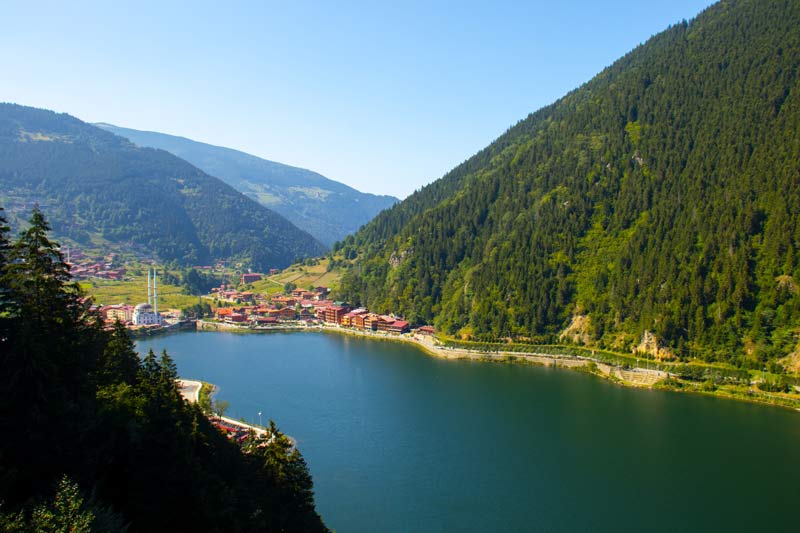
Turkey flourishes with historical and natural tourist attractions and is one of the largest countries in the world in terms of the number of tourists visiting annually. Tourists from all over the world come to enjoy the historical monuments of various civilizations and the enchanting nature that distinguishes Turkey.
An economy with continuous growth
هل أنت جاهز للاستثمار؟ ما هو نوع الشقة المفضل لك؟
 استديو
 غرفة نوم واحدة
 غرفتين نوم
 3 غرف نوم أو أكثر
حدد المنطقة
Turkey is among the countries with strong economic performance and continuous growth, qualifying it to be a member of the G20 economic group. Turkey has made significant leaps in manufacturing and exports, and many experts expect Turkey to rank among the leading economies in the future.
This provides those who live and settle in Turkey with diverse investment opportunities in a developing country with a free and emerging market, and the chances of improving economic and living standards are increasing in Turkey.
Disadvantages of life in Turkey for Arabs
The Turkish people take pride in their language and identity, and generally lack proficiency in foreign languages. Perhaps the main problem or difficulty faced by foreigners in Turkey is the language barrier.
However, with Turkey's recent openness to different cultures and the growing number of Arabs in the country, Turks have somewhat overcome this problem. The Turkish government has recently hired translators in hospitals and various government offices to serve foreigners in general, free of charge.
What are the best cities for Arabs to live in Turkey?
Turkey is characterized by its vast geographical area. According to Turkish law, foreigners and Arabs, except for Syrian nationals, are allowed to live and buy property in Turkey normally in various provinces. However, there are several Turkish cities that are particularly suitable for Arabs to live in for various reasons, the most important of which are:
- Presence of Arab communities living in the same province
- Presence of Arab restaurants and markets
- Presence of Arab schools, educational centers, and institutes
How many living rooms are in the apartment?
Among these cities, Istanbul tops the list of the best Turkish provinces for Arabs to live in, as it is home to the largest Arab community in Turkey, estimated at 5 million people.
The capital, Ankara, comes in second place, hosting large Arab communities, including resident Arab families and students studying at Turkish universities. In addition, Trabzon, Bursa, Antalya, and Yalova are among the cities inhabited by Arabs of various nationalities.
Frequently asked questions about life in Turkey for Arabs
Get a free real estate consultation
What is your preferred way of communication? How would you like to be contacted?
Get a free real estate consultation
Choose the appropriate day for us to contact you
Some Turks speak Classical Arabic, especially those living in border areas adjacent to Arab countries. Among religiously committed Turkish groups, learning Arabic is common due to its connection to the language of the Quran, so you find them speaking Classical Arabic fluently.
In this context, it is important to mention the number of Arabs who have been naturalized and obtained Turkish citizenship, who have become among the Turkish citizens who speak Arabic.
Edited by: Imtilak Real Estate©
Did you like our topic? You can share it with your friends now!
Do you like this topic? You can share it with your friends now!


Do you like this topic? You can share it with your friends now!
Need real estate help?
Consult with our specialist